Why the Right Choice Makes All the Difference?
Waking up every morning and looking in the mirror only to feel self-conscious about thinning patches or a receding hairline — that is a reality for millions of people across India. If you have been exploring non-surgical solutions, chances are you have already heard about hair bonding. But here is the thing: not all treatments are created equal, and choosing the wrong one can leave you looking worse than before.
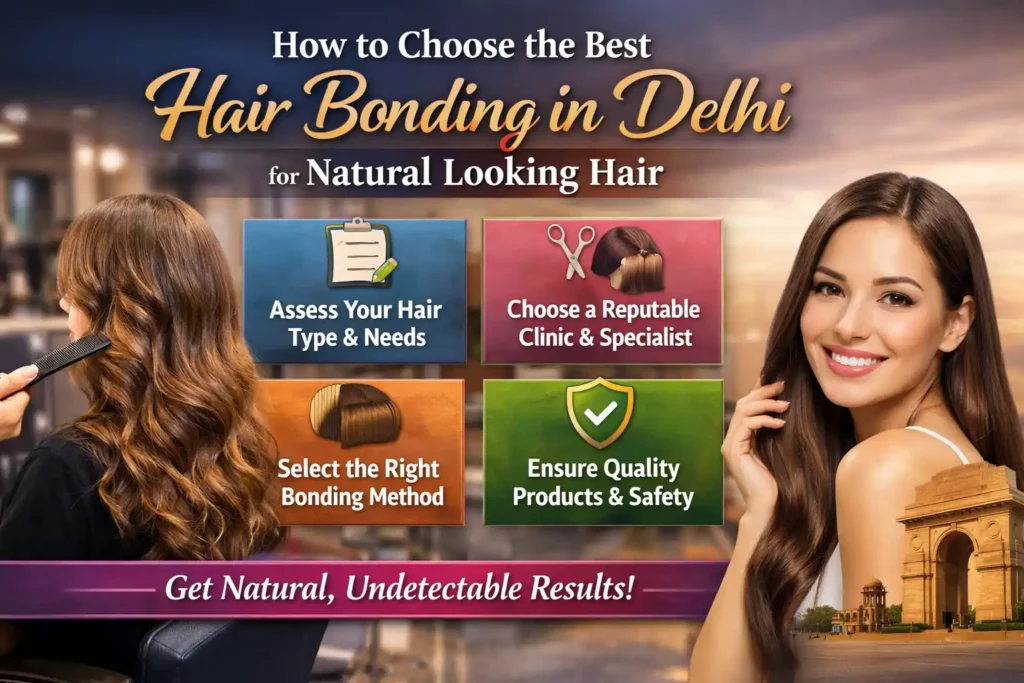
Finding the best hair bonding in Delhi is not just about walking into the nearest salon and picking a package. It requires understanding your hair type, the technique being used, and most importantly, the expertise of the professional handling the procedure. Delhi’s market is flooded with options — from budget pop-up studios to high-end clinics — and knowing how to separate quality from marketing noise is exactly what this guide is designed to help you do.
Whether you are dealing with hair loss due to stress, genetics, or medical treatments, this article walks you through everything you need to know before making a decision you will wear on your head every single day.
1. Understand What Hair Bonding Actually Is
The Basic Concept
Hair bonding is a non-surgical hair replacement technique where a custom-made hair unit — either synthetic or human hair — is attached to your scalp or existing hair using specialized adhesives, tapes, or bonding agents. Unlike wigs, which simply sit on your head, bonded hair systems integrate closely with your scalp, creating a far more natural appearance and allowing for greater movement and versatility.
What Sets It Apart
The key difference between bonding and other attachment methods lies in the durability and invisibility of the bond itself. A well-executed procedure uses skin-safe adhesives that hold firmly during swimming, workouts, or even a Delhi monsoon downpour. When done correctly, even someone standing inches away should not be able to tell you are wearing a hair system.
That said, the quality of both the hair unit and the bonding material varies enormously across salons. Cheap adhesives can cause scalp irritation, and low-quality hair patches can look unnaturally dense or carry an artificial sheen that gives them away instantly.
2. Identify the Right Technique for Your Needs
Tape Bonding
Tape bonding is one of the most popular techniques for first-timers. Double-sided medical-grade tapes are applied along the perimeter of a hair patch, creating a secure yet removable bond. This method is ideal if you want the flexibility to remove and reattach the system yourself at home. Most tape bonds last between 1 to 3 weeks, depending on your scalp activity and care routine.
Liquid Adhesive Bonding
For a longer-lasting hold, liquid bonding adhesives are applied either around the hairline or across the entire base of the hair system. This technique is common among clients who want a more permanent solution — typically lasting 4 to 8 weeks before reattachment is needed. It does require more skill to apply and remove properly, which is why finding the best hair bonding in Delhi means finding a technician who has performed this procedure hundreds of times.
Scalp Integration Systems
If you have partial hair loss but still retain some natural hair, scalp integration systems might be your best bet. These feature a mesh base through which your own hair grows, blending natural and added hair seamlessly. The result feels incredibly organic — both to the eye and to the touch.
3. What to Look for in a Hair Bonding Salon in Delhi
Delhi has no shortage of salons claiming expertise in hair systems. But walking in without knowing what to evaluate can be a costly mistake. Here is what separates a trustworthy studio from one that is simply good at advertising.
Consultation Process
Any reputable professional will insist on a thorough consultation before recommending a treatment. During this session, they should assess your scalp health, the extent of hair loss, your lifestyle, and your budget. If a salon skips this step and jumps straight to package pricing, consider that a red flag.
Portfolio and Before/After Gallery
Ask to see real client photos — not stock images. A legitimate studio will have a portfolio of before-and-after results across different hair types, skin tones, and loss patterns. Pay close attention to the hairline: this is the most telling indicator of skill. A natural hairline should look slightly irregular, never perfectly straight.
Hair Unit Quality
Ask specifically about the origin of the hair used. European, Indian Remy, or Chinese hair each has different textures and durability profiles. Indian Remy hair tends to blend most naturally for Indian clients. Also enquire about the base material — lace, monofilament, or polyurethane — each offering a different trade-off between breathability and longevity.
4. Common Issues and Ways to Overcome Them
The Unnatural Hairline Problem
One of the most common complaints from people who have had a poor experience is an unnaturally sharp or dense hairline. This usually results from a poorly fitted base or a technician who has not customized the unit. The solution: always request a personalized hairline trim during your fitting session, where the front edge is carefully cut and shaped to mimic your natural growth pattern.
Scalp Irritation and Adhesive Sensitivity
Sensitive skin reacts poorly to low-quality adhesives. If you have ever experienced itching, redness, or peeling around the attachment area, the likely culprit is the adhesive. A skilled technician will always perform a patch test 24 to 48 hours before full application. Medical-grade, hypoallergenic adhesives cost slightly more but make a significant difference for clients with sensitive scalps.
Maintenance Overload
Many people are surprised by how much upkeep a hair system requires. Reapplication appointments, gentle washing routines, and avoiding certain products are all part of the commitment. Going in with realistic expectations — and choosing a studio that provides detailed aftercare guidance — helps prevent the frustration that leads people to abandon their systems prematurely.
5. Questions You Must Ask Before Booking
Think of choosing a hair bonding studio the same way you would choose a specialist: ask questions, verify credentials, and trust your instincts. Here are the non-negotiables.
• How long has your studio been performing hair bonding specifically, not just general styling?
• Do you customize each hair unit, or do you work with off-the-shelf stock systems?
• What adhesive brands do you use, and are they dermatologist-tested?
• What does a maintenance appointment involve, and how frequently will I need one?
• Do you offer a warranty or adjustment session if I am unsatisfied with the results?
The answers to these questions will tell you more about a studio’s professionalism than any promotional brochure could. Trustworthy professionals welcome scrutiny; evasive ones should raise alarms.
6. Aftercare: Making Your Investment Last
Washing and Conditioning
Caring for a bonded hair system is different from washing natural hair. Use a sulphate-free, gentle shampoo and avoid scrubbing directly at the bond lines. Let the shampoo rinse through the system naturally. Regular conditioning keeps the hair fibres soft and reduces tangling — especially important for curly or wavy textures that are more prone to matting over time.
Sleeping and Physical Activity
Wrap your hair system loosely in a silk or satin scarf before sleeping to minimize friction. During physical activity, sweat can weaken adhesive bonds over time, so maintenance appointments every 3 to 6 weeks are essential. Swimmers should use waterproof adhesives and apply a thin layer of petroleum jelly along the bond line as a barrier before entering the pool.
Heat and Styling
Most human hair systems can handle heat styling, but synthetic ones cannot. Always confirm with your technician before using flat irons or blow dryers. A heat protectant spray is equally important — the hair in your system does not receive natural oils from your scalp, so it needs external moisture and protection to stay looking healthy over time.
Conclusion: Invest in the Right Expertise
Ultimately, choosing the proper hair bonding treatment means investing in a solution that meets your lifestyle, budget, and aesthetic goals. The best hair bonding in Delhi is not necessarily the most expensive option — it is the one where skilled professionals genuinely understand your unique situation and provide honest guidance rather than a one-size-fits-all package.
From understanding the difference between tape and liquid adhesive systems, to evaluating salon credibility, to building a sustainable aftercare routine, every step of this journey matters. Hair restoration is deeply personal, and you deserve a result that makes you feel confident — not like you are wearing a mask.
If you are ready to take the next step with a team that combines technical expertise with personalized care, Radiance Hair Studios has built a strong reputation in Delhi’s hair restoration space for exactly this kind of thoughtful, results-driven approach. Their specialists also offer hair weaving in Delhi as a thread-based integration alternative, giving you a full spectrum of non-surgical solutions to explore.
Do not settle for a quick fix. Book a consultation, ask the hard questions, and choose a solution that grows with you — literally and figuratively.
Frequently Asked Questions:-
1) How long does hair bonding last, and how often do I need maintenance?
- Tape bonding lasts 1–3 weeks; liquid adhesive bonding lasts 4–8 weeks. Most specialists recommend a maintenance visit every 3–6 weeks to clean the bond line, reapply adhesive, and keep your hair system looking fresh.
2) Will hair bonding damage my existing natural hair?
- When done correctly with medical-grade adhesives, hair bonding causes minimal damage. The key risks come from low-quality glues or improper removal. Always request a patch test beforehand and have the system professionally removed — never pull it off yourself.
3) What is the difference between hair bonding and hair weaving?
- Hair bonding attaches a full hair unit to the scalp using adhesive or tape — ideal for significant hair loss. Hair weaving threads new hair into your existing strands using a needle and thread, making it better suited for clients who want added volume with partial natural hair.
4) Can I swim, exercise, or shower normally after hair bonding?
- Yes. A properly bonded system holds through sweat, showers, and swimming. Use waterproof adhesive before pools, rinse with fresh water after swimming, and wash with a sulphate-free shampoo. Wait 24–48 hours after a fresh bond before any intense activity.
5) How do I find a trustworthy hair bonding salon in Delhi?
- Look for real before-and-after photos, insist on a consultation before any treatment, and ask about adhesive brands and patch testing. Check verified Google reviews for consistent mentions of natural results and honest pricing. A confident studio will always welcome your questions.